Why Church Membership?
FOUR INVITATIONS TO THOSE REMAINING ON THE FRINGE
 Membership in a local church is a healthy and important part of living out our faith and serving Christ together. One cannot be joined with Christ by faith without also becoming part of Christ’s Body, the new humanity in Jesus, whom God has redeemed for himself, in whom he dwells by his Spirit, and through whom he displays his glory to the world. And our union with Christ and his universal Body is meant to be lived out in commitment to and communion with a local expression of that Body.
It is through our membership with a local church that we show our commitment and willing submission to the church’s leadership, care, and discipline—to the support and accountability of the rest of the body, and to the elders who have been called by God to shepherd and watch over our souls (Acts 20:28; Heb. 13:17). Membership helps align our hearts and vision with the local church’s vision, and enables us to participate fully in the life, fellowship, leadership, and direction of the church.
Yet not all are convinced of the importance of membership, or whether it’s the right step for them at this time or in this place.
When you’re new to an area, it’s a good idea to take some time to truly get to know a church before making a commitment. Don’t just passively observe during a worship service or two. Kick the tires, look under the hood, get to know the leadership, examine the doctrinal statement, participate in the life of the church.
Yet for a variety of reasons, a number of church-goers remain on the fringe for years, attending (even serving) but not joining a local church. It’s for this reason that I offer four invitations to you who remain on the fringe, in hopes of encouraging you to take the step of church membership. Read more…
The Holiness of Sex and Marriage
This sermon was preached at Westgate Church on May 5, 2013. Audio and downloadable notes will be linked as soon as they are available.
************
 Today we have a rather sensitive but very significant topic before us: What does it mean to honor Jesus as King with respect to sex, marriage, and divorce? It’s a sensitive topic because it’s rather personal. And it’s an area in which so many of us have made mistakes, or have been directly affected by the mistakes of others. Some of us grew up in homes torn apart by marital unfaithfulness or divorce. Some of us are living in those homes right now. Some of us have been divorced. Perhaps we’re remarried, or maybe married to a divorced person—and some of those divorces were not for the right reasons. Some of us are involved sexually with someone who is not our spouse. Some of us just dream and think about that. This passage is going to raise some uncomfortable questions that touch each of us in one way or another.
It’s a sensitive topic. Yet it’s also a very significant topic, because contrary to popular opinion, marriage, sex, and divorce are not just ideas out there up for grabs. Jesus has an opinion on them. In fact, he not only has the authority to determine what purpose and shape they should take, but also to judge those who ignore or overturn his design or purpose for marriage and sex. I don’t think many of us believe that today. And yet right here, as Jesus lays out his vision for life in his kingdom, under his authority as King of heaven and earth, he gives us his decree: that marriage is a holy covenant, that sex is a holy activity—both having been designed by God and for God and his kingdom purposes.
 My prayer here is that we would deal sensitively with this topic, recognizing that we’re all sinners in need of grace. And yet that we would deal seriously with it—that to whatever extent we’ve ignored or overturned or rewritten God’s rule, his vision for marriage and sex—that we would be convicted by his Spirit, and that we would be strengthened by the same Spirit to repent, to turn away from our sin, and to joyfully follow Jesus. Read more…
When Tragedy Strikes so Close to Home
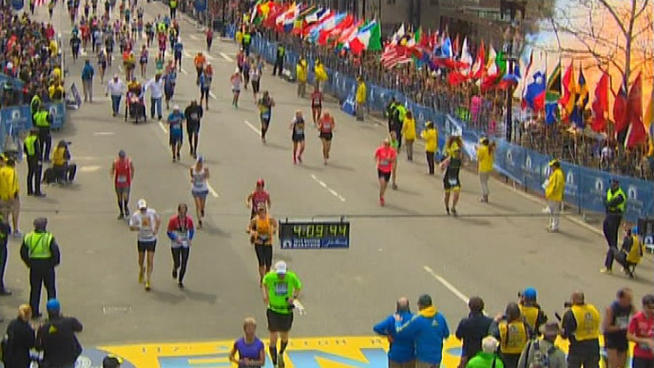
 Last Monday was the first Boston marathon that I and my family have ever watched. We’re just about a 15 minute walk from Central St. in Natick. So like much of the neighborhood, we loaded a bag of goodies, grabbed the stroller, and headed down to watch a pretty incredible race, sitting right around the 8-mile mark. I’ve never seen anything like it. It was fun. And we were kind of excited to be part of Boston culture. This is what the townies do, right? There was almost a kind of pride—“we live in walking distance to the Boston marathon route.”
Hours later, came the sober and shocking reminder that we still live in a fallen world—a world filled with what the psalmist simply calls “trouble.” There’s evidence enough of that every day. But tragedies like this get our attention in a special way. That’s why we can often remember where we were when we first heard the news about these kinds of events. Just getting out of class in Richards Hall my freshman year of college when I heard from a former classmate about the Columbine shooting. Sitting in the dentist’s chair watching the news while the second tower fell to the ground on 9/11. Heading home for lunch when I heard on the radio that the department store my sister-in-law worked at in Omaha, Van Maur, had been shot up, and there were several casualties. And you grab the phone, and you pray, “Lord, don’t let it be Jessica.”

This post is from my sermon delivered at Westgate Church on April 21, 2013. To download the audio or notes, click the icon.
Many of you grabbed your phones on Monday, and prayed, trying to locate friends and family. Friends and family from around the country tried to locate you. And the fear that grips you in that moment. The uncertainty. The sudden realization that we’re not as safe as we thought we were, and we’re not really in control of any of this. Our hearts are flooded with fear—the fear of losing someone you love, the fear of life never being the same again, the fear of pain, even death.
We breathed a sigh of relief on Friday night, as the last of the suspects was apprehended. And we praise God for the incredible work of our local and federal authorities. But we’re still left with some unsettling questions. What do we do with all this? How do we make sense of it all when tragedy strikes so close to home? When the earth seems to give way around us, like it did on Monday? When it’s not just happening on the TV in some other part of the world, but in the city we love, on the streets we walk on, in the neighborhoods we live in?
The psalm that we’re looking at this morning is very honest about how this world is filled with trouble. With disaster and tragedy. How it does not work the way it is supposed to. And yet, how amid that chaos, amid the crises, there is hope, there is stability, there is security so strong that we need not live in fear. A hope and security that come not from within us, but from the presence of the God who is with us. Read more…
A Prayer for Boston in Light of Today’s Tragedy
God is our refuge and strength,
a very present help in trouble.
Therefore we will not fear though the earth gives way,
though the mountains be moved into the heart of the sea,
though its waters roar and foam,
though the mountains tremble at its swelling. Selah
There is a river whose streams make glad the city of God,
the holy habitation of the Most High.
God is in the midst of her;
she shall not be moved;
God will help her when morning dawns.
The nations rage, the kingdoms totter;
he utters his voice, the earth melts.
The LORD of hosts is with us;
the God of Jacob is our fortress. Selah
Come, behold the works of the LORD,
how he has brought desolations on the earth.
He makes wars cease to the end of the earth;
he breaks the bow and shatters the spear;
he burns the chariots with fire.
“Be still, and know that I am God.
I will be exalted among the nations,
I will be exalted in the earth!”
The LORD of hosts is with us;
the God of Jacob is our fortress. Selah (Psalm 46, ESV)
Gracious Father,
Today we’re faced with the painful reminder that we still live in a fallen world.
Today the earth gave way as an explosion tore apart the finish line of the Boston Marathon. Yet this was no natural chaos; this was an act of evil, intent on wounding and terrorizing the people of this city and her guests, while the rest of the world was watching.
We call it ‘terrorism’ because that is what it seeks to do—strike terror and fear into our hearts. God, we confess, sometimes it works. We are afraid. We fear for our safety. We fear losing our loved ones. We fear the loss of life as we know it.
Yet there is one thing on earth that no bomb can shake, and no terror can overcome: your presence. “The Lord of hosts is with us; the God of Jacob is our fortress.”
Because you are with your people, we need not be afraid. Though the waters roar and the nations rage, you are a refuge and fortress to your people. Though the mountains be moved into the heart of the sea, those who take shelter in your presence will not be moved. Though this world may take away from us everything we hold precious, even our lives, it cannot take us away from you. You are our refuge and strength, our very present help in trouble.
As our city quakes from the effects of sin in this world—the evil, the violence, the injuries and loss of life, we pray that your holy and healing presence would be made known.
We pray for the victims of this tragedy. We pray for healing for the wounded, and comfort for the bereaved. We pray for loved ones sitting in waiting rooms or watching the news at home. May hearts and eyes turn to you at this time, as you make your power and presence known by your Spirit in the face of Jesus Christ.
We pray for those who have come to the aid of the victims—the police officers, the bystanders, the response teams and medical personnel. We pray for the doctors and nurses administering care late into the night. We thank you for their courage, on a day when our Commonwealth celebrates the heroism of the patriots of the Revolutionary War. We pray that you would be with them to guide them in their care and treatment.
We pray for churches in Boston, that together we would be light for this city. As you dwell in a special way among your people, may your people be to this city an expression of your compassion, care, and shelter for those who are scared and hurting in this city. May Jesus be on display in our words and deeds—he who wept at the death of his beloved friend, who in his own death took on himself the evil and sorrow of this world, mixed with his Father’s holy anger against our evil rebellion, yet conquered death and brought new life when he rose from the grave.
And we’re reminded that our hope rests in another city—a city that cannot be shaken.
So we look forward to the day when we will rest and rejoice in your glorious presence in that heavenly city, the New Jerusalem, as it comes down from heaven in your new creation.
We look forward to a day when you will make wars and violence cease to the ends of the earth. When all wrongs will be brought to justice, and your peace will triumph over all.
We look forward to a day when all will recognize your rightful rule over creation, when your enemies will be put under your feet, and your name will be exalted to the ends of the earth.
And we pray in the meantime that we would rest in you. Give us the grace to be still, to cease striving amid our helplessness, with the knowledge that you are God. You are our help. You will be exalted as God. Your kingdom will triumph in the end. Your name will be exalted in all the earth.
Be present with us now. And come quickly, Lord Jesus. Amen.
“A Prayer of Desire for Fresh Grace”
From Scotty Smith:
****
And he began to teach them that the Son of Man must suffer many things and be rejected by the elders and the chief priests and the scribes and be killed, and after three days rise again. And he spoke this plainly. And Peter took him aside and began to rebuke him. But turning and seeing his disciples, he rebuked Peter and said, “Get behind me, Satan! For you are not setting your mind on the things of God, but on the things of man.” Mark 8:31-33
Dear Lord Jesus, one of the many things I cherish about the Bible is the way it robs me of my penchant for hero worship. Who but God would write a book documenting the foibles and failures of so many of his sons and daughters? Who but God would chronicle the ways his chosen leaders limp along and prove themselves to be in constant need of mercy and grace?
This gives me great encouragement and hope. It also gives me freedom to acknowledge that I need the gospel today just as much as the first day I believed it. This will be just as true tomorrow, and the next day, and the next. Keep me convinced, Lord Jesus, because I’m much like Peter. In my own ways, like Peter, I try also try to “keep you from the cross.”
When I mute my heart to the insult of grace—minimizing my need of the gospel, I deny your cross. When I think, even for one moment, that my obedience merits anything, or makes you love me more than you already do, I deny your cross.
When I put others under the microscope and measure of performance-based living—coping a critical spirit and judgmental attitude, I deny your cross. When I wallow in self-contempt and shame—disbelieving and dismissing your great love lavished upon us in the gospel, I deny your cross. When I’d rather do penance than repent and collapse upon the riches of grace, once again, I deny your cross.
Lord Jesus, by the power of the gospel, help me to mind the things of God more than I’m influenced by the way men normally think. May your cross get bigger and bigger to me, and may my boast in it grow louder and louder. Jesus, you’re the only hero in the Bible, and I’m more than fine with that. We matter, but you alone are the point. Hallelujah! So very Amen I pray, in your patient and persistent name.
Why I’m Praying for Revival at Westgate
 Depending on your background, the word “revival” can conjure up images of everything from massive tents with powerful speakers, to weekly church meetings or special healing services. The common link in most of the these understandings is that the Spirit of God shows up in a powerful way to do something special—though the precise nature of that ‘something special’ can be widely debated.
I’m not interested in (or qualified for) discussing the biblical and historical nuances of revival (there are good books available for that). But as I and my colleagues at Westgate Church have been reading through Tim Keller’s Center Church, I’ve been struck by the necessity and beauty of revival, or as he phrases it, “gospel renewal” in the life of the church. Read more…
 Rob Bell made headlines again yesterday with his public affirmation of same-sex marriage. Bell, who is the former pastor of Mars Hill Bible Church in Grand Rapids, Michigan, and author of the controversial book, Love Wins, shared in a recent interview:
“I am for marriage. I am for fidelity. I am for love, whether it’s a man and woman, a woman and a woman, a man and a man. I think the ship has sailed and I think the church needs — I think this is the world we are living in and we need to affirm people wherever they are.”
For those who have followed the development of Bell’s theology, even from a distance, this comes as no surprise. We saw the same shift in Brian McLaren last year, who has long been a figurehead of one stream of the so-called emerging church. In a day when even the President of the United States has made the approval of gay marriage part of his agenda, Bell and McLaren seem to be on the winning side of culture. As Bell suggests:
“I think we are witnessing the death of a particular subculture that doesn’t work. I think there is a very narrow, politically intertwined, culturally ghettoized, Evangelical subculture that was told ‘we’re gonna change the thing’ and they haven’t. And they actually have turned away lots of people. And I think that when you’re in a part of a subculture that is dying, you make a lot more noise because it’s very painful. You sort of die or you adapt. And if you adapt, it means you have to come face to face with some of the ways we’ve talked about God, which don’t actually shape people into more loving, compassionate people. And we have supported policies and ways of viewing the world that are actually destructive. And we’ve done it in the name of God and we need to repent.”
What I find ironic about Bell’s post-evangelical rhetoric (and that of others like him) is that the Christian faith they are now espousing, the fruit of their postmodern experiment, has turned out to be nearly identical to the results of the modernist experiment from over a hundred years ago. In other words, what we’re looking at is humanism 2.0. Read more…
A song of gospel-shaped hope for a fallen world
JJ Heller is one of my favorite artists, not simply because of the quality of her music, but because she has a way of giving honest voice to how messed up and broken this world is while point listeners to the hope of the gospel–the hope of Christ, the presence of God amid the mess, and the promise of his new creation when he will make everything right in the end.
I first got hooked on Heller with her song, “Your Hands.” Below is a song from her new album, Loved (released today), called “Who You Are.” You can read the lyrics below the video.
PREPARING TO JOURNEY THROUGH THE SERMON ON THE MOUNT
 This Sunday our journey through the Gospel of Matthew brings us to the foot of the mountain from where Jesus gave the famous address recorded in Matthew 5–7. The Sermon on the Mount is perhaps the best known portion of Jesus’ teaching, with its ethics of peace, love, and humility celebrated by Christians and non-Christians alike. And yet so often we focus on the ethics of the kingdom without connecting them to the King who gives them out of his own authority and power. This can take several shapes.
For some, we celebrate the ethical vision, lamenting that if only everyone would live this way, all the world’s problems would disappear. But we fail to recognize that these are no mere principles for peaceful living, but a call to utter submission to the King of heaven and earth. In other words, we want many of values of the kingdom, but we don’t want the King. We make the Sermon on the Mount about us, hijacking its teaching and using it to advance our own vision for life, which invariably results in throwing out the ethics we don’t like. What we’re left with in the end neither resembles the sermon’s content nor respects the teacher’s authority.
For others, we shy away from this ethical teaching because we know we are utterly incapable of living up to it. In response, we might find ourselves softening the sharp edges, or even relegating the teaching to a different time and people so it no longer applies to us. But this is likewise to focus on the commands while neglecting the King who gave them—the King who is presently establishing his kingdom on earth (cf. 4:17) and whose kingdom work will climax in the cross, resurrection, and sending of his Spirit.
So before we can say anything about the message of Sermon on the Mount, we have to first reckon with the messenger—the King who speaks as God.
In the Sermon on the Mount Jesus is portrayed to us as a new Moses, who comes out of the wilderness and ascends the mountain (5:1-2) to give God’s instruction. Jesus came not to relax or remove the Law, but to fulfill it (5:17-20).
And yet, Jesus is more than a new Moses, for he speaks with the authority of God himself (cf. 7:28-29). He is no mere prophet shouting, “Thus says the Lord.” Rather, Jesus says, “You have heard it said before . . . but I say to you” (e.g. 5:21-22). Throughout the sermon Jesus speaks on direct behalf of his Father in heaven (e.g. 5:45-48; 6:1-18; 7:7-10). He speaks as the divine law-giver and judge (7:21-23). And he speaks as the one in whose words we find wisdom and life (7:24-27).
Jesus is the King who speaks as God. Which means that there can be no real adherence to the Sermon on the Mount without first recognizing and humbly submitting to the authority of Jesus.
Join us at Westgate Church, beginning this Sunday (March 10), as we spend the next several months walking through Christ’s vision for life in his kingdom—life in joyful submission to the King of heaven and earth.
Worshiping God When We Can’t Gather for Worship
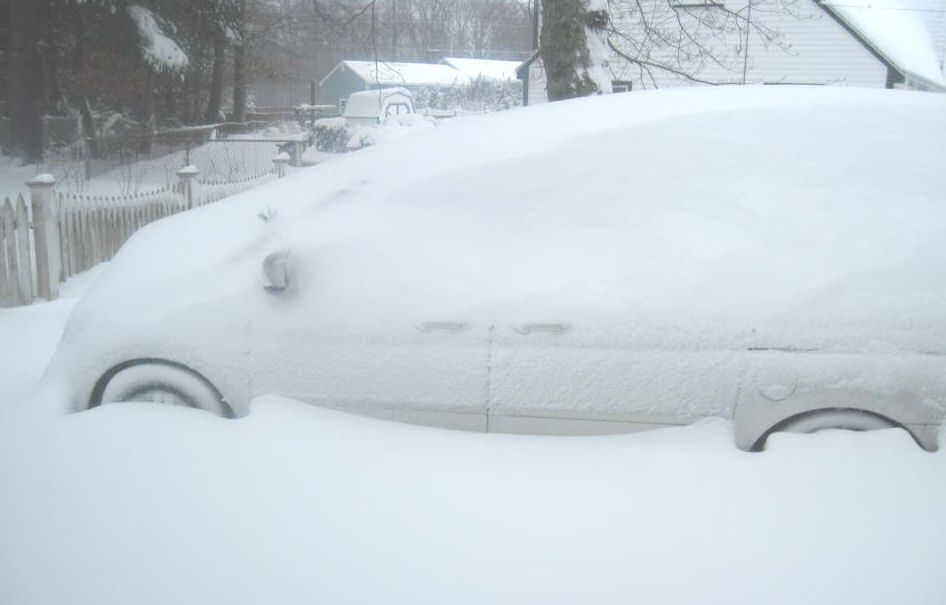 With our services at Westgate cancelled this morning due to winter storm Nemo, I thought I would share a few thoughts on how we might serve God this Lord’s Day even though we’re unable to gather for corporate worship. After all, worship is not what we do only when we gather, much less only when we sing; it is what we do with the whole of life (Rom. 12:1-2; see our Music Director Sarah Detweiler’s helpful comments).
1. Spend time as a family in God’s Word and in prayer. This doesn’t have to be complicated or replicate what we do at the church building. Pick a passage of Scripture to read (if your children are able, include them in the reading). Ask a few questions about what it’s saying and why it matters. Then spend a few minutes in prayer together as a family. You might even sing a hymn or praise song. In our home we often watch a children’s Bible story video as well (we really like the What’s In the Bible Series). If you and your family have a hard to spending time in God’s Word and prayer as a family, this is a great opportunity to get started.
2. Spend part of your day serving your neighbors. Do some of your neighbors still need help clearing their driveway, or digging their car out? Give them a hand. Or maybe bake some goodies with the family and deliver them to some neighbors this afternoon. Find a way to serve others and show the love of Christ in tangible ways.
3. Catch up a sermon you missed. All our past sermons back to May 2011 are available online here. Or you take the opportunity to listen to a different pastor online this morning (here are a few of my favorites: Kent Hughes, Tim Keller, John Piper, Jay Thomas, Jeff Vanderstelt).

 in the meantime